Every Shot Has a Job: The Choices Behind Effective Business Video
Framing, lighting, sound, and camera placement shape what an audience understands before a subject finishes a sentence. Rocket House Pictures explains how intentional production choices strengthen training, testimonial, and marketing videos.
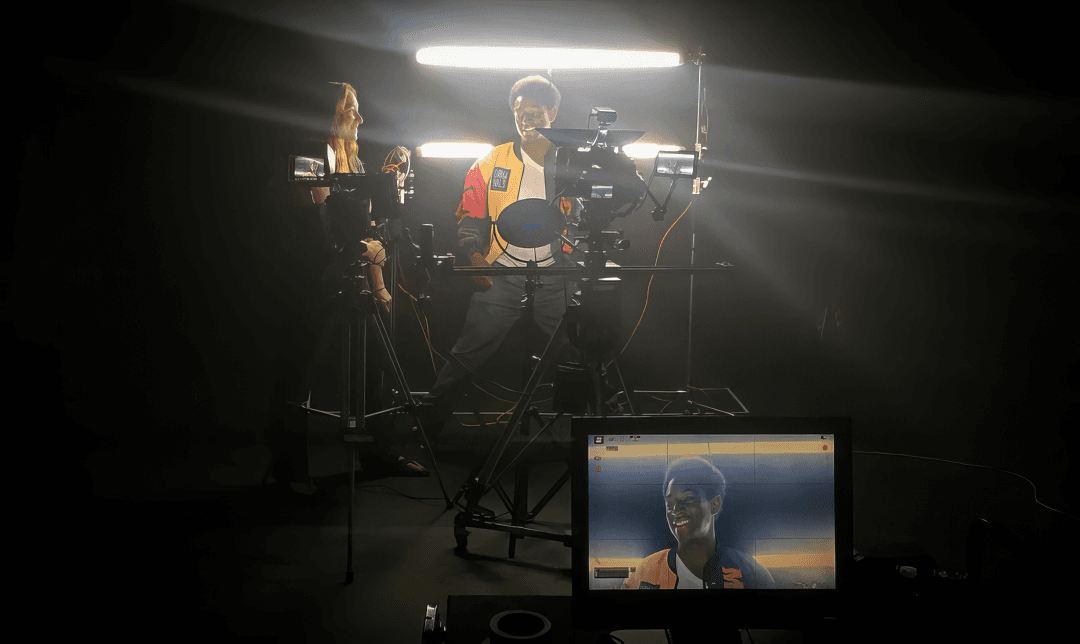
A camera records what is placed in front of it. A production team decides what the audience will notice, how a person will be perceived, and what the scene should feel like.
That distinction guides our work at
Rocket House Pictures
. When we arrive on set, we are already thinking about the purpose of the video, the people who will watch it, and the action the client wants them to take. The lens, frame, lighting, background, sound, and movement all need to support that purpose.
These choices can be quiet. Most viewers will never point out the distance between a subject and the camera or the direction of a key light. They will still feel the effect. A close frame can make an interview personal. A wider frame can show the environment that gives the speaker credibility. Soft, open lighting can help someone feel approachable. Greater contrast can add weight to a serious subject. A cluttered background can compete with the speaker, while the right details can tell part of the story before the interview begins.
After more than 20 years working in
Denver video production
, we have learned that strong business videos are built through hundreds of small decisions made with care.
Framing tells the audience where to look
Framing is one of the first decisions we make because it controls the relationship between the subject, the setting, and the viewer.
For a testimonial, we may place the camera close enough to catch subtle expressions while leaving enough of the environment in view to establish where the person works or how they use a service. The direction of the subject's eyeline matters. The amount of space around them matters. Even the height of the camera can affect how relaxed, authoritative, or vulnerable a person appears.
We also decide what stays outside the frame. A conference room may contain distracting signs, bright windows, reflective tables, or objects that pull attention away from the speaker. Moving the camera a few feet or changing the lens can solve those problems without making the location feel artificial.
This principle is easy to see in narrative filmmaking. In an
American Cinematographer article about The Truman Show
, cinematographer Peter Biziou discusses using unusual angles and strong foreground elements to create the film's surveillance quality. Corporate video uses a quieter visual vocabulary, but the underlying idea is the same: camera position changes how viewers interpret a scene.
Our
testimonial video production
follows this approach. We want the frame to support the speaker's credibility without making the interview feel staged. That usually means simplifying the space, keeping useful visual context, and choosing a composition that gives the person room to speak naturally.
Lighting gives the frame emotional information
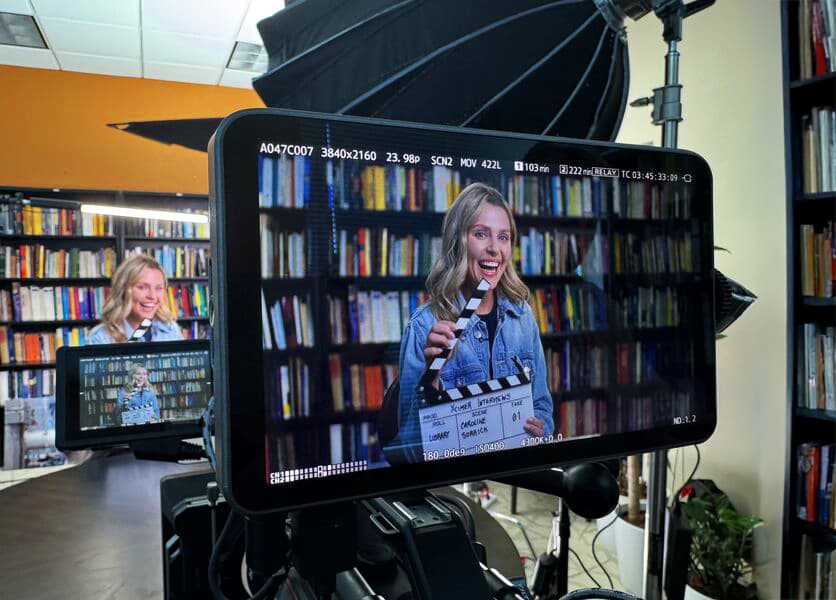
Lighting has a practical job. It helps the camera record a clear image and keeps skin tones accurate. It also shapes mood, depth, and attention.
A large, soft source close to the subject can create an open and conversational feeling. A more directional source can reveal facial structure and give the image greater depth. Background lights can separate a person from the room, guide the eye, or draw attention to part of the environment. Color temperature can make a space feel warm and familiar or cool and technical.
We make those decisions based on the subject and the job of the video. A customer describing a positive experience may call for warmth and openness. A subject discussing human trafficking requires restraint. A training demonstration needs even, consistent lighting so every action is easy to follow. A brand film may allow stronger contrast, camera movement, and a more stylized palette.
The most flattering setup is not automatically the right setup. The light needs to fit the message and remain consistent with the rest of the piece.
Training videos depend on clarity and consistency
Training videos have to teach. Visual choices should make information easier to understand, help employees stay focused, and keep a series consistent across locations and production days.
Our long-running work with Truckers Against Trafficking has included training videos created for specialized audiences that need to recognize and report human trafficking. For a UPS employee training series, Rocket House Pictures filmed in Atlanta and Denver under the guidance of Truckers Against Trafficking.
Producing across two cities required a shared visual system. Interview framing, lighting direction, color, sound, demonstrations, and supporting footage had to feel like parts of the same course. The production also had to handle a serious subject with accuracy and respect. Dramatic lighting or aggressive camera movement could have distracted from the information. Clear compositions and controlled pacing kept the instruction at the center.
That is the work behind
effective training and educational videos
. We think through what employees must see, what they must remember, and where confusion could enter the frame. The video may need close coverage of a physical task, a clean view of a presenter, graphics that reinforce key steps, or a structure that allows sections to be updated later.
Testimonial videos need trust before technique
Many people are uncomfortable on camera. A large crew, a crowded room, or constant interruptions can make an interview subject guarded. That changes the footage long before editing begins.
We keep the interview environment calm and explain the process before recording. Instead of handing someone a paragraph to memorize, we use questions that invite specific memories and concrete details. Camera placement allows the subject to focus on the conversation rather than stare into a lens unless direct address serves the project.
Lighting and framing then reinforce the tone of the interview. For a client story, the setting can provide useful evidence. A founder in the workshop where the product is built communicates something different from the same person against a blank wall. A nonprofit participant filmed in a familiar community space may feel more grounded than they would in a rented studio.
Our decade-long partnership with
Boys & Girls Clubs of Weld County
has taught us the value of that familiarity. Across many impact videos, the locations, participants, and campaigns have changed. The constant is attention to the person in front of the camera. The Club environment, interactions between staff and young people, and small moments captured between formal setups give each story its shape.
The same care guides our
documentary series with the Biennial of the Americas
. From the Americas features people from across the Western Hemisphere who now call Colorado home. Framing a participant in a workplace, studio, home, or community setting provides information that an interview alone cannot carry. The background becomes part of the account instead of decoration.
Marketing videos need a visual point of view
A marketing video often has several jobs at once. It may introduce a company, explain a service, build confidence, and give a sales team useful material for several platforms.
That does not mean every shot should be glossy or packed with movement. The visual approach should match the company and the audience. A technical business may benefit from precise compositions and controlled camera moves. A community organization may call for handheld observation and closer access to people. A product demonstration needs angles that explain function. A
leadership message
needs a setting and performance that feel credible.
We establish those rules before production. This gives the crew a common reference for lens choices, camera movement, lighting contrast, wardrobe, locations, and b-roll. It also gives the editor footage that belongs together.
Continuity matters when a production covers several locations or dates.
The Frame.io post-production workflow
guide describes shot matching as the work of making images in a sequence function together visually. Much of that continuity begins on set. When lighting ratios, color temperature, exposure, and camera settings are documented carefully, the edit has a stronger foundation.
On-set intention protects the final edit
Editors can adjust color, tighten timing, add graphics, and shape a strong sequence. They cannot recover an expression that was missed, remove every distraction from a poor location, or create coverage that was never filmed.
For that reason, we think beyond the main shot while production is underway. We capture the hands, tools, reactions, environments, and transitions that let an editor build a complete scene. We watch for continuity. We record clean sound. We leave room in selected compositions for captions or graphics. If the client needs horizontal, square, and vertical versions, we account for those crops before the camera rolls.
Planning also helps clients get more from a production day. One well-designed interview setup can support a primary film, individual testimonials, short social edits, recruiting material, and internal communications. The footage still needs a clear hierarchy. Shooting more without a plan creates volume, not usefulness.
Experience shows up in the choices
Rocket House Pictures has produced more than 1,000 videos since the company was founded in Denver in 2005. Our work spans businesses, nonprofits, government agencies, cultural organizations, agencies, and Fortune 500 companies. The projects vary in scale and subject, but our responsibility stays consistent: understand what the video needs to do and make production choices that support it.
That is also why clients return. Long partnerships give us a deeper understanding of an organization's voice, audience, review process, and practical needs. New projects become more efficient, and the visual language grows with the organization.
Our client reviews
include experiences with training programs, customer stories, fundraising films, documentaries, and branded content.
For companies searching for a Denver video production partner, the camera package is only one part of the decision. Ask how the team approaches interviews. Ask why they would choose a location, lens, frame, or lighting style. Ask how production decisions will support the edit and the places where the video will be used.
Every shot should have a reason to exist. That reason starts with the audience and continues through the final cut.
Rocket House Pictures produces training, testimonial, and marketing videos in Denver, across Colorado, and throughout the country.
Contact our team
to discuss your next production.